Thursday, November 21, 2013

https://docs.google.com/uc?export=download&id=0B3vyNXp6qDWwZ1hDYVFNamNZZTg
The progress of The Salvation Army in its work amongst the poor and lost of many lands has compelled me to face the problems which an more or less hopefully considered in the following pages. The grim necessities of a huge Campaign carried on for many years against the evils which lie at the root of all the miseries of modern life, attacked in a thousand and one forms by a thousand and one lieutenants, have led me step by step to contemplate as a possible solution of at least some of those problems the Scheme of social Selection and Salvation which I have here set forth.

When but a mere child the degradation and helpless misery of the poor Stockingers of my native town, wandering gaunt and hunger-stricken through the streets droning out their melancholy ditties, crowding the Union or toiling like galley slaves on relief works for a bare subsistence kindled in my heart yearnings to help the poor which have continued to this day and which have had a powerful influence on my whole life. A last I may be going to see my longings to help the workless realised. I think I am.

The commiseration then awakened by the misery of this class has been an impelling force which has never ceased to make itself felt during forty years of active service in the salvation of men. During this time I am thankful that I have been able, by the good hand of God upon me, to do something in mitigation of the miseries of this class, and to bring not only heavenly hopes and earthly gladness to the hearts of multitudes of these wretched crowds, but also many material blessings, including such commonplace things as food, raiment, home, and work, the parent of so many other temporal benefits. And thus many poor creatures have proved Godliness to be "profitable unto all things, having the promise of the life that now is as well as of that which is to come."

These results have been mainly attained by spiritual means. I have boldly asserted that whatever his peculiar character or circumstances might be, if the prodigal would come home to his Heavenly Father, he would find enough and to spare in the Father's house to supply all his need both for this world and the next; and I have known thousands nay, I can say tens of thousands, who have literally proved this to be true, having, with little or no temporal assistance, come out of the darkest depths of destitution, vice and crime, to be happy and honest citizens and true sons and servants of God.

And yet all the way through my career I have keenly felt the remedial measures usually enunciated in Christian programmes and ordinarily employed by Christian philanthropy to be lamentably inadequate for any effectual dealing with the despairing miseries of these outcast classes. The rescued are appallingly few--a ghastly minority compared with the multitudes who struggle and sink in the open-mouthed abyss. Alike, therefore, my humanity and my Christianity, if I may speak of them in any way as separate one from the other, have cried out for some more comprehensive method of reaching and saving the perishing crowds.

No doubt it is good for men to climb unaided out of the whirlpool on to the rock of deliverance in the very presence of the temptations which have hitherto mastered them, and to maintain a footing there with the same billows of temptation washing over them. But, alas! with many this seems to be literally impossible. That decisiveness of character, that moral nerve which takes hold of the rope thrown for the rescue and keeps its hold amidst all the resistances that have to be encountered, is wanting. It is gone. The general wreck has shattered and disorganised the whole man.

Alas, what multitudes there are around us everywhere, many known to my readers personally, and any number who may be known to them by a very short walk from their own dwellings, who are in this very plight! Their vicious habits and destitute circumstances make it certain that without some kind of extraordinary help, they must hunger and sin, and sin and hunger, until, having multiplied their kind, and filled up the measure of their miseries, the gaunt fingers of death will close upon then and terminate their wretchedness. And all this will happen this very winter in the midst of the unparalleled wealth, and civilisation, and philanthropy of this professedly most Christian land.

Now, I propose to go straight for these sinking classes, and in doing so shall continue to aim at the heart. I still prophesy the uttermost disappointment unless that citadel is reached. In proposing to add one more to the methods I have already put into operation to this end, do not let it be supposed that I am the less dependent upon the old plans or that I seek anything short of the old conquest. If we help the man it is in order that we may change him. The builder who should elaborate his design and erect his house and risk his reputation without burning his bricks would be pronounced a failure and a fool. Perfection of architectural beauty, unlimited expenditure of capital, unfailing watchfulness of his labourers, would avail him nothing if the bricks were merely unkilned clay. Let him kindle a fire. And so here I see the folly of hoping to accomplish anything abiding, either in the circumstances or the morals of these hopeless classes, except there be a change effected in the whole man as well as in his surroundings. To this everything I hope to attempt will tend. In many cases I shall succeed, in some I shall fail; but even in failing of this my ultimate design, I shall at least benefit the bodies, if not the souls, of men; and if I do not save the fathers, I shall make a better chance for the children.

It will be seen therefore that in this or in any other development that may follow I have no intention to depart in the smallest degree from the main principles on which I have acted in the past. My only hope for the permanent deliverance of mankind from misery, either in this world or the next, is the regeneration or remaking of the individual by the power of the Holy Ghost through Jesus Christ. But in providing for the relief of temporal misery I reckon that I am only making it easy where it is now difficult, and possible where it is now all but impossible, for men and women to find their way to the Cross of our Lord Jesus Christ.

That I have confidence in my proposals goes without saying. I believe they will work. In miniature many of them are working already. But I do not claim that my Scheme is either perfect in its details or complete in the sense of being adequate to combat all forms of the gigantic evils against which it is in the main directed. Like other human things it must be perfected through suffering. But it is a sincere endeavour to do something, and to do it on principles which can be instantly applied and universally developed. Time, experience, criticism, and, above all, the guidance of God will enable us, I hope, to advance on the lines here laid down to a true and practical application of the words of the Hebrew Prophet: "Loose the bands of wickedness; undo the heavy burdens; let the oppressed go free; break every yoke; deal thy bread to the hungry; bring the poor that are cast out to thy house. When thou seest the naked cover him and hide not thyself from thine own flesh. Draw out thy soul to the hungry-- Then they that be of thee shall build the old waste places and Thou shalt raise up the foundations of many generations."

To one who has been for nearly forty years indissolubly associated with me in every undertaking I owe much of the inspiration which has found expression in this book. It is probably difficult for me to fully estimate the extent to which the splendid benevolence and unbounded sympathy of her character have pressed me forward in the life-long service of man, to which we have devoted both ourselves and our children. It will be an ever green and precious memory to me that amid the ceaseless suffering of a dreadful malady my dying wife found relief in considering and developing the suggestions for the moral and social and spiritual blessing of the people which are here set forth, and I do thank God she was taken from me only when the book was practically complete and the last chapters had been sent to the press.

In conclusion, I have to acknowledge the services rendered to me in preparing this book by Officers under my command. There could be no hope of carrying out any part of it, but for the fact that so many thousands are ready at my call and under my direction to labour to the very utmost of their strength for the salvation of others without the hope of earthly reward. Of the practical common sense, the resource, the readiness for every form of usefulness of those Officers and Soldiers, the world has no conception. Still less is it capable of understanding the height and depth of their self-sacrificing devotion to God and the poor.

I have also to acknowledge valuable literary help from a friend of the poor, who, though not in any way connected with the Salvation Army, has the deepest sympathy with its aims and is to a large extent in harmony with its principles. Without such assistance I should probably have found it--overwhelmed as I already am with the affairs of a world-wide enterprise--extremely difficult, if not impossible, to have presented these proposals for which I am alone responsible in so complete a form, at any rate at this time. I have no doubt that if any substantial part of my plan is successfully carried out he will consider himself more than repaid for the services so ably rendered. 

https://docs.google.com/uc?export=download&id=0B3vyNXp6qDWwU1NtUncxN2tLQzg
MYSELF

"My house, my affairs, my ache and my religion--"


I was fifty years old to-day. Half a century has hurried by since I first lay in my mother's wondering arms. To be sure, I am not old; but I can no longer deceive myself into believing that I am still young. After all, the illusion of youth is a mental habit consciously encouraged to defy and face down the reality of age. If, at twenty, one feels that he has reached man's estate he, nevertheless, tests his strength and abilities, his early successes or failures, by the temporary and fictitious standards of youth.

At thirty a professional man is younger than the business man of twenty-five. Less is expected of him; his work is less responsible; he has not been so long on his job. At forty the doctor or lawyer may still achieve an unexpected success. He has hardly won his spurs, though in his heart he well knows his own limitations. He can still say: "I am young yet!" And he is.

But at fifty! Ah, then he must face the facts! He either has or has not lived up to his expectations and he never can begin over again. A creature of physical and mental habit, he must for the rest of his life trudge along in the same path, eating the same food, thinking the same thoughts, seeking the same pleasures--until he acknowledges with grim reluctance that he is an old man.

I confess that I had so far deliberately tried to forget my approaching fiftieth milestone, or at least to dodge it with closed eyes as I passed it by, that my daughter's polite congratulation on my demicentennial anniversary gave me an unexpected and most unpleasant shock.

"You really ought to be ashamed of yourself!" she remarked as she joined me at breakfast.

"Why?" I asked, somewhat resenting being thus definitely proclaimed as having crossed into the valley of the shadows.

"To be so old and yet to look so young!" she answered, with charming _voir-faire_.

Then I knew the reason of my resentment against fate. It was because I was labeled as old while, in fact, I was still young. Of course that was it. Old? Ridiculous! When my daughter was gone I gazed searchingly at myself in the mirror. Old? Nonsense!

I saw a man with no wrinkles and only a few crow's-feet such as anybody might have had; with hardly a gray hair on my temples and with not even a suggestion of a bald spot. My complexion and color were good and denoted vigorous health; my flesh was firm and hard on my cheeks; my teeth were sound, even and white; and my eyes were clear save for a slight cloudiness round the iris.

The only physical defect to which I was frankly willing to plead guilty was a flabbiness of the neck under the chin, which might by a hostile eye have been regarded as slightly double. For the rest I was strong and fairly well--not much inclined to exercise, to be sure, but able, if occasion offered, to wield a tennis racket or a driver with a vigor and accuracy that placed me well out of the duffer class.

Yes; I flattered myself that I looked like a boy of thirty, and I felt like one--except for things to be hereinafter noted--and yet middle-aged men called me "sir" and waited for me to sit down before doing so themselves; and my contemporaries were accustomed to inquire jocularly after my arteries. I was fifty! Another similar stretch of time and there would be no I. Twenty years more--with ten years of physical effectiveness if I were lucky! Thirty, and I would be useless to everybody. Forty--I shuddered. Fifty, I would not be there. My room would be vacant. Another face would be looking into the mirror.

Unexpectedly on this legitimate festival of my birth a profound melancholy began to possess my spirit. I had lived. I had succeeded in the eyes of my fellows and of the general public. I was married to a charming woman. I had two marriageable daughters and a son who had already entered on his career as a lawyer. I was prosperous. I had amassed more than a comfortable fortune. And yet--

These things had all come, with a moderate amount of striving, as a matter of course. Without them, undoubtedly I should be miserable; but with them--with reputation, money, comfort, affection--was I really happy? I was obliged to confess I was not. Some remark in Charles Reade's Christie Johnstone came into my mind--not accurately, for I find that I can no longer remember literally--to the effect that the only happy man is he who, having from nothing achieved money, fame and power, dies before discovering that they were not worth striving for.

I put to myself the question: _Were_ they worth striving for? Really, I did not seem to be getting much satisfaction out of them. I began to be worried. Was not this an attitude of age? Was I not an old man, perhaps, regardless of my youthful face?

At any rate, it occurred to me sharply, as I had but a few more years of effective life, did it not behoove me to pause and see, if I could, in what direction I was going?--to "stop, look and listen"?--to take account of stock?--to form an idea of just what I was worth physically, mentally and morally?--to compute my assets and liabilities?--to find out for myself by a calm and dispassionate examination whether or not I was spiritually a bankrupt? That was the hideous thought which like a deathmask suddenly leered at me from behind the arras of my mind--that I counted for nothing--cared really for nothing! That when I died I should have been but a hole in the water!

The previous evening I had taken my two distinctly blase daughters to see a popular melodrama. The great audience that packed the theater to the roof went wild, and my young ladies, infected in spite of themselves with the same enthusiasm, gave evidences of a quite ordinary variety of excitement; but I felt no thrill. To me the heroine was but a painted dummy mechanically repeating the lines that some Jew had written for her as he puffed a reeking cigar in his rear office, and the villain but a popinjay with a black whisker stuck on with a bit of pitch. Yet I grinned and clapped to deceive them, and agreed that it was the most inspiriting performance I had seen in years.

In the last act there was a horserace cleverly devised to produce a convincing impression of reality. A rear section of the stage was made to revolve from left to right at such a rate that the horses were obliged to gallop at their utmost speed in order to avoid being swept behind the scenes. To enhance the realistic effect the scenery itself was made to move in the same direction. Thus, amid a whirlwind of excitement and the wild banging of the orchestra, the scenery flew by, and the horses, neck and neck, raced across the stage--without progressing a single foot.

Wednesday, November 20, 2013

https://docs.google.com/uc?export=download&id=0B3vyNXp6qDWwNkxlNHhtNC0wRjA
The Arabian Nights


In the chronicles of the ancient dynasty of the Sassanidae, who reigned for about four hundred years, from Persia to the borders of China, beyond the great river Ganges itself, we read the praises of one of the kings of this race, who was said to be the best monarch of his time. His subjects loved him, and his neighbors feared him, and when he died he left his kingdom in a more prosperous and powerful condition than any king had done before him.

The two sons who survived him loved each other tenderly, and it was a real grief to the elder, Schahriar, that the laws of the empire forbade him to share his dominions with his brother Schahzeman. Indeed, after ten years, during which this state of things had not ceased to trouble him, Schahriar cut off the country of Great Tartary from the Persian Empire and made his brother king.

Now the Sultan Schahriar had a wife whom he loved more than all the world, and his greatest happiness was to surround her with splendor, and to give her the finest dresses and the most beautiful jewels. It was therefore with the deepest shame and sorrow that he accidentally discovered, after several years, that she had deceived him completely, and her whole conduct turned out to have been so bad, that he felt himself obliged to carry out the law of the land, and order the grand-vizir to put her to death. The blow was so heavy that his mind almost gave way, and he declared that he was quite sure that at bottom all women were as wicked as the sultana, if you could only find them out, and that the fewer the world contained the better. So every evening he married a fresh wife and had her strangled the following morning before the grand-vizir, whose duty it was to provide these unhappy brides for the Sultan. The poor man fulfilled his task with reluctance, but there was no escape, and every day saw a girl married and a wife dead.

This behavior caused the greatest horror in the town, where nothing was heard but cries and lamentations. In one house was a father weeping for the loss of his daughter, in another perhaps a mother trembling for the fate of her child; and instead of the blessings that had formerly been heaped on the Sultan's head, the air was now full of curses.

The grand-vizir himself was the father of two daughters, of whom the elder was called Scheherazade, and the younger Dinarzade. Dinarzade had no particular gifts to distinguish her from other girls, but her sister was clever and courageous in the highest degree. Her father had given her the best masters in philosophy, medicine, history and the fine arts, and besides all this, her beauty excelled that of any girl in the kingdom of Persia.

Tuesday, November 19, 2013

https://docs.google.com/uc?export=download&id=0B3vyNXp6qDWwZFlfbEMyZUFDU0k

HOW THE WHALE GOT HIS THROAT


 In the sea, once upon a time, O my Best Beloved, there was a Whale, and he ate fishes. He ate the starfish and the garfish, and the crab and the dab, and the plaice and the dace, and the skate and his mate, and the mackereel and the pickereel, and the really truly twirly-whirly eel. All the fishes he could find in all the sea he ate with his mouth—so! Till at last there was only one small fish left in all the sea, and he was a small 'Stute Fish, and he swam a little behind the Whale's right ear, so as to be out of harm's way. Then the Whale stood up on his tail and said, 'I'm hungry.' And the small 'Stute Fish said in a small 'stute voice, 'Noble and generous Cetacean, have you ever tasted Man?'
 
 'No,' said the Whale. 'What is it like?'
 
 'Nice,' said the small 'Stute Fish. 'Nice but nubbly.'
 
 'Then fetch me some,' said the Whale, and he made the sea froth up with his tail.
 
 'One at a time is enough,' said the 'Stute Fish. 'If you swim to latitude Fifty North, longitude Forty West (that is magic), you will find, sitting on a raft, in the middle of the sea, with nothing on but a pair of blue canvas breeches, a pair of suspenders (you must not forget the suspenders, Best Beloved), and a jack-knife, one ship-wrecked Mariner, who, it is only fair to tell you, is a man of infinite-resource-and-sagacity.'
 
 So the Whale swam and swam to latitude Fifty North, longitude Forty West, as fast as he could swim, and on a raft, in the middle of the sea, with nothing to wear except a pair of blue canvas breeches, a pair of suspenders (you must particularly remember the suspenders, Best Beloved), and a jack-knife, he found one single, solitary shipwrecked Mariner, trailing his toes in the water. (He had his mummy's leave to paddle, or else he would never have done it, because he was a man of infinite-resource-and-sagacity.)
 
 Then the Whale opened his mouth back and back and back till it nearly touched his tail, and he swallowed the shipwrecked Mariner, and the raft he was sitting on, and his blue canvas breeches, and the suspenders (which you must not forget), and the jack-knife—He swallowed them all down into his warm, dark, inside cup-boards, and then he smacked his lips—so, and turned round three times on his tail.
 
 But as soon as the Mariner, who was a man of infinite-resource-and-sagacity, found himself truly inside the Whale's warm, dark, inside cup-boards, he stumped and he jumped and he thumped and he bumped, and he pranced and he danced, and he banged and he clanged, and he hit and he bit, and he leaped and he creeped, and he prowled and he howled, and he hopped and he dropped, and he cried and he sighed, and he crawled and he bawled, and he stepped and he lepped, and he danced hornpipes where he shouldn't, and the Whale felt most unhappy indeed. (Have you forgotten the suspenders?)
 
 So he said to the 'Stute Fish, 'This man is very nubbly, and besides he is making me hiccough. What shall I do?'

Monday, November 18, 2013

https://docs.google.com/uc?export=download&id=0B3vyNXp6qDWwbkRSenEtbl9nSEk
It is said that the effect of eating too much lettuce is "soporific."

I have never felt sleepy after eating lettuces; but then I am not a rabbit.

They certainly had a very soporific effect upon the Flopsy Bunnies!
family

When Benjamin Bunny grew up, he married his Cousin Flopsy. They had a large family, and they were very improvident and cheerful.

I do not remember the separate names of their children; they were generally called the "Flopsy Bunnies."
gardening

As there was not always quite enough to eat,—Benjamin used to borrow cabbages from Flopsy's brother, Peter Rabbit, who kept a nursery garden.
family

Sometimes Peter Rabbit had no cabbages to spare.
gardening

When this happened, the Flopsy Bunnies went across the field to a rubbish heap, in the ditch outside Mr. McGregor's garden.

Mr. McGregor's rubbish heap was a mixture. There were jam pots and paper bags, and mountains of chopped grass from the mowing machine (which always tasted oily), and some rotten vegetable marrows and an old boot or two. One day—oh joy!—there were a quantity of overgrown lettuces, which had "shot" into flower.
chewinglettuce

The Flopsy Bunnies simply stuffed lettuces. By degrees, one after another, they were overcome with slumber, and lay down in the mown grass.
asleepinbag 


Continue Reading

Sunday, November 17, 2013

https://docs.google.com/uc?export=download&id=0B3vyNXp6qDWwTzFpYlNzYjI1T0U
Perseus was the son of Danaë, who was the daughter of a king. And when Perseus was a very little boy, some wicked people put his mother and himself into a chest, and set them afloat upon the sea. The wind blew freshly, and drove the chest away from the shore, and the uneasy billows, tossed it up and down; while Danaë clasped her child closely to her bosom, and dreaded that some big wave would dash its foamy crest over them both. The chest sailed on, however, and neither sank nor was upset; until, when night was coming, it floated so near an island that it got entangled in a fisherman's nets, and was drawn out high and dry upon the sand. The island was called Seriphus, and it was reigned over by King Polydectes, who happened to be the fisherman's brother.

This fisherman, I am glad to tell you, was an exceedingly humane and upright man. He showed great kindness to Danaë and her little boy; and continued to befriend them, until Perseus had grown to be a handsome youth, very strong and active, and skillful in the use of arms. Long before this time, King Polydectes had seen the two strangers—the mother and her child—who had come to his dominions in a floating chest. As he was not good and kind, like his brother the fisherman, but extremely wicked, he resolved to send Perseus on a dangerous enterprise, in which he would probably he killed, and then to do some great mischief to Danaë herself. So this bad-hearted king spent a long while in considering what was the most dangerous thing that a young man could possibly undertake to perform. At last, having hit upon an enterprise that promised to turn out as fatally as he desired, he sent for the youthful Perseus.

The young man came to the palace, and found the king sitting upon his throne.  "Perseus," said King Polydectes, smiling craftily upon him, "you are grown up a fine young man. You and your good mother have received a great deal of kindness from myself, as well as from my worthy brother the fisherman, and I suppose you would not be sorry to repay some of it."

"Please your Majesty," answered Perseus, "I would willingly risk my life to do so."

"Well, then," continued the king, still with a cunning smile on his lips, "I have a little adventure to propose to you; and, as you are a brave and enterprising youth, you will doubtless look upon it as a great piece of good luck to have so rare an opportunity of distinguishing yourself. You must know, my good Perseus, I think of getting married to the beautiful Princess Hippodamia; and it is customary, on these occasions, to make the bride a present of some far-fetched and elegant curiosity. I have been a little perplexed, I must honestly confess, where to obtain anything likely to please a princess of her exquisite taste. But, this morning, I flatter myself, I have thought of precisely the article."


Continue Reading
https://docs.google.com/uc?export=download&id=0B3vyNXp6qDWwenZQUFVLMkJfTnM
Once upon a time there was a little girl called Lucie, who lived at a farm called Little-town. She was a good little girl—only she was always losing her pocket-handkerchiefs!

One day little Lucie came into the farm-yard crying—oh, she did cry so! "I've lost my pocket-handkin! Three handkins and a pinny! Have you seen them, Tabby Kitten?"

Lucie and the hen

The Kitten went on washing her white paws; so Lucie asked a speckled hen—

"Sally Henny-penny, have you found three pocket-handkins?"

But the speckled hen ran into a barn, clucking—

"I go barefoot, barefoot, barefoot!"

Lucie and the stile

And then Lucie asked Cock Robin sitting on a twig.

Cock Robin looked sideways at Lucie with his bright black eye, and he flew over a stile and away.

Lucie climbed upon the stile and looked up at the hill behind Little-town—a hill that goes up—up—into the clouds as though it had no top!

And a great way up the hill-side she thought she saw some white things spread upon the grass.


Continue Reading

Saturday, November 16, 2013

https://docs.google.com/uc?export=download&id=0B3vyNXp6qDWweS1abkFHNzBHeUk
One morning a little rabbit sat on a bank.

He pricked his ears and listened to the trit-trot, trit-trot of a pony.

A gig was coming along the road; it was driven by Mr. McGregor, and beside him sat Mrs. McGregor in her best bonnet.

Hop, skip

As soon as they had passed, little Benjamin Bunny slid down into the road, and set off—with a hop, skip, and a jump—to call upon his relations, who lived in the wood at the back of Mr. McGregor's garden.

The Hole

That wood was full of rabbit holes; and in the neatest, sandiest hole of all lived Benjamin's aunt and his cousins—Flopsy, Mopsy, Cotton-tail, and Peter.

Old Mrs. Rabbit was a widow; she earned her living by knitting rabbit-wool mittens and muffatees (I once bought a pair at a bazaar). She also sold herbs, and rosemary tea, and rabbit-tobacco (which is what we call lavender).

Ears

Little Benjamin did not very much want to see his Aunt.

He came round the back of the fir-tree, and nearly tumbled upon the top of his Cousin Peter.

In a handkerchief

Peter was sitting by himself. He looked poorly, and was dressed in a red cotton pocket-handkerchief.


Continue Reading
This is a Tale about a tail—a tail that belonged to a little red squirrel, and his name was Nutkin.

He had a brother called Twinkleberry, and a great many cousins: they lived in a wood at the edge of a lake.

In the middle of the lake there is an island covered with trees and nut bushes; and amongst those trees stands a hollow oak-tree, which is the house of an owl who is called Old Brown.

One autumn when the nuts were ripe, and the leaves on the hazel bushes were golden and green—Nutkin and Twinkleberry and all the other little squirrels came out of the wood, and down to the edge of the lake.

Rafting to the Island

They made little rafts out of twigs, and they paddled away over the water to Owl Island to gather nuts.

Each squirrel had a little sack and a large oar, and spread out his tail for a sail.


Continue Reading

Thursday, November 14, 2013

https://docs.google.com/uc?export=download&id=0B3vyNXp6qDWwejFORlRfZnB1TzQ
ONCE upon a time there were four little Rabbits, and their names were-- Flopsy, Mopsy, Cotton-tail, and Peter.

They lived with their Mother in a sand-bank, underneath the root of a very big fir tree.

"NOW, my dears," said old Mrs. Rabbit one morning, "you may go into the fields or down the lane, but don't go into Mr. McGregor's garden: your Father had an accident there; he was put in a pie by Mrs. McGregor."

"NOW run along, and don't get into mischief. I am going out."

THEN old Mrs. Rabbit took a basket and her umbrella, to the baker's. She bought a loaf of brown bread and five currant buns.

FLOPSY, Mopsy, and Cottontail, who were good little bunnies, went down the lane to gather blackberries;

BUT Peter, who was very naughty, ran straight away to Mr. McGregor's garden and squeezed under the gate!

FIRST he ate some lettuces and some French beans; and then he ate some radishes;

AND then, feeling rather sick, he went to look for some parsley.

BUT round the end of a cucumber frame, whom should he meet but Mr. McGregor!

MR. McGREGOR was on his hands and knees planting out young cabbages, but he jumped up and ran after Peter, waving a rake and calling out, "Stop thief!"

PETER was most dreadfully frightened; he rushed all over the garden, for he had forgotten the way back to the gate.

He lost one of his shoes among the cabbages, and the other shoe amongst the potatoes.

AFTER losing them, he ran on four legs and went faster, so that I think he might have got away altogether if he had not unfortunately run into a gooseberry net, and got caught by the large buttons on his jacket. It was a blue jacket with brass buttons, quite new.

PETER gave himself up for lost, and shed big tears; but his sobs were overheard by some friendly sparrows, who flew to him in great excitement, and implored him to exert himself.


Continue Reading

Wednesday, November 13, 2013

https://docs.google.com/uc?export=download&id=0B3vyNXp6qDWwcUFORWRWN3EtY28
 CHAPTER I

 RETROSPECTIVE


 "WE ARE ONE AND UNDIVIDED"

 About twenty years ago, I think it was--I won't be certain, though-- a man whose name, if I remember correctly, was Wm. L. Yancy--I write only from memory, and this was a long time ago--took a strange and peculiar notion that the sun rose in the east and set in the west, and that the compass pointed north and south. Now, everybody knew at the time that it was but the idiosyncrasy of an unbalanced mind, and that the United States of America had no north, no south, no east, no west. Well, he began to preach the strange doctrine of there being such a thing. He began to have followers. As you know, it matters not how absurd, ridiculous and preposterous doctrines may be preached, there will be some followers. Well, one man by the name of (I think it was) Rhett, said it out loud. He was told to "s-h-e-e." Then another fellow by the name (I remember this one because it sounded like a graveyard) Toombs said so, and he was told to "sh-sh-ee-ee." Then after a while whole heaps of people began to say that they thought that there was a north and a south; and after a while hundreds and thousands and millions said that there was a south. But they were the persons who lived in the direction that the water courses run. Now, the people who lived where the water courses started from came down to see about it, and they said, "Gents, you are very much mistaken. We came over in the Mayflower, and we used to burn witches for saying that the sun rose in the east and set in the west, because the sun neither rises nor sets, the earth simply turns on its axis, and we know, because we are Pure(i)tans." The spokesman of the party was named (I think I remember his name because it always gave me the blues when I heard it) Horrors Greeley; and another person by the name of Charles Sumner, said there ain't any north or south, east or west, and you shan't say so, either. Now, the other people who lived in the direction that the water courses run, just raised their bristles and continued saying that there is a north and there is a south. When those at the head of the water courses come out furiously mad, to coerce those in the direction that water courses run, and to make them take it back. Well, they went to gouging and biting, to pulling and scratching at a furious rate. One side elected a captain by the name of Jeff Davis, and known as one-eyed Jeff, and a first lieutenant by the name of Aleck Stephens, commonly styled Smart Aleck. The other side selected as captain a son of Nancy Hanks, of Bowling Green, and a son of old Bob Lincoln, the rail-splitter, and whose name was Abe. Well, after he was elected captain, they elected as first lieutenant an individual of doubtful blood by the name of Hannibal Hamlin, being a descendant of the generation of Ham, the bad son of old Noah, who meant to curse him blue, but overdid the thing, and cursed him black.

 Well, as I said before, they went to fighting, but old Abe's side got the best of the argument. But in getting the best of the argument they called in all the people and wise men of other nations of the earth, and they, too, said that America had no cardinal points, and that the sun did not rise in the east and set in the west, and that the compass did not point either north or south.

 Well, then, Captain Jeff Davis' side gave it up and quit, and they, too, went to saying that there is no north, no south, no east, no west. Well, "us boys" all took a small part in the fracas, and Shep, the prophet, remarked that the day would come when those who once believed that the American continent had cardinal points would be ashamed to own it. That day has arrived. America has no north, no south, no east, no west; the sun rises over the hills and sets over the mountains, the compass just points up and down, and we can laugh now at the absurd notion of there being a north and a south.

 Well, reader, let me whisper in your ear. I was in the row, and the following pages will tell what part I took in the little unpleasant misconception of there being such a thing as a north and south.


 THE BLOODY CHASM

 In these memoirs, after the lapse of twenty years, we propose to fight our "battles o'er again."

 To do this is but a pastime and pleasure, as there is nothing that so much delights the old soldier as to revisit the scenes and battlefields with which he was once so familiar, and to recall the incidents, though trifling they may have been at the time.

 The histories of the Lost Cause are all written out by "big bugs," generals and renowned historians, and like the fellow who called a turtle a "cooter," being told that no such word as cooter was in Webster's dictionary, remarked that he had as much right to make a dictionary as Mr. Webster or any other man; so have I to write a history.

https://docs.google.com/uc?export=download&id=0B3vyNXp6qDWwdlpPRGJFWHN0dmc
Some of you have heard already of the old Greeks; and all of you, as you grow up,  will hear more and more of them. Those of you who are boys will, perhaps, spend  a great deal of time in reading Greek books; and the girls, though they may not  learn Greek, will be sure to come across a great many stories taken from Greek  history, and to see, I may say every day, things which we should not have had if it  had not been for these old Greeks. You can hardly find a well-written book which  has not in it Greek names, and words, and proverbs; you cannot walk through a  great town without passing Greek buildings; you cannot go into a well-furnished  room without seeing Greek statues and ornaments, even Greek patterns of  furniture and paper; so strangely have these old Greeks left their mark behind  them upon this modern world in which we now live. And as you grow up, and read  more and more, you will find that we owe to these old Greeks the beginners of all  our mathematics and geometry - that is, the science and knowledge of numbers,  and of the shapes of things, and of the forces which make things move and stand at  rest; and the beginnings of our geography and astronomy; and of our laws, and  freedom, and politics - that is, the science of how to rule a country, and make it  peaceful and strong. And we owe to them, too, the beginning of our logic - that is,  the study of words and of reasoning; and of our metaphysics - that is, the study of  our own thoughts and souls. And last of all, they made their language so beautiful  that foreigners used to take to it instead of their own; and at last Greek became the  common language of educated people all over the old world, from Persia and Egypt  even to Spain and Britain. And therefore it was that the New Testament was  written in Greek, that it might be read and understood by all the nations of the  Roman empire; so that, next to the Jews, and the Bible which the Jews handed down to us, we owe more to these old Greeks than to any people upon earth.

Now you must remember one thing - that 'Greeks' was not their real name. They  called themselves always 'Hellens,' but the Romans miscalled them Greeks; and we  have taken that wrong name from the Romans - it would take a long time to tell  you why. They were made up of many tribes and many small separate states; and  when you hear in this book of Minuai, and Athenians, and other such names, you  must remember that they were all different tribes and peoples of the one great  Hellen race, who lived in what we now call Greece, in the islands of the Archipelago, and along the coast of Asia Minor (Ionia, as they call it), from the Hellespont to  Rhodes, and had afterwards colonies and cities in Sicily, and South Italy (which was alled Great Greece), and along the shores of the Black Sea at Sinope, and Kertch,  and at Sevastopol. And after that, again, they spread under Alexander the Great,  and conquered Egypt, and Syria, and Persia, and the whole East. But that was  many hundred years after my stories; for then there were no Greeks on the Black  Sea shores, nor in Sicily, or Italy, or anywhere but in Greece and in Ionia. And if  you are puzzled by the names of places in this book, you must take the maps and  find them out. It will be a pleasanter way of learning geography than out of a dull  lesson-book.

Now, I love these old Hellens heartily; and I should be very ungrateful to them if I  did not, considering all that they have taught me; and they seem to me like  brothers, though they have all been dead and gone many hundred years ago. So  as you must learn about them, whether you choose or not, I wish to be the first to  introduce you to them, and to say, 'Come hither, children, at this blessed Christmas  time, when all God's creatures should rejoice together, and bless Him who  redeemed them all. Come and see old friends of mine, whom I knew long ere you  were born. They are come to visit us at Christmas, out of the world where all live  to God; and to tell you some of their old fairy tales, which they loved when they  were young like you.'

https://docs.google.com/uc?export=download&id=0B3vyNXp6qDWwLUdJa251SWY2aE0
He collapse dright in the middle of a packed courtroom. He was one of this country's most distinguished trial lawyers. He was also a man who was as well known for the three-thousand-dollar Italian suits which drap ed his well-fed frameas for his remarkable string of legal victories. I simply stood there, paralyzed by the shock of what I had just witnessed. The great Julian Mantle had been reduced to a victim and was now squirming on the ground like a help less infant, shaking and shivering and sweating likea maniac.

Everything seemed to move in slow motion from that point on. "MyGod, Julian's introuble!" his paralegal screamed,emotionally offering us a blinding glimpse of the obvious.The judge looked panic-stricken and quickly muttered something into the private phone she had had installed in the event of an emergency. As for me ,I could only stand there, dazed and confused. Please don't die, you old fool.Its too early for youtocheckout.You don't deserve to die like this.

The bailiff, who earlier had looked as if he had been embalmed in his standing position, leapt into action and started to perform CPR on the fallen legal hero. The paralegal was at his side, her long blond curls dangling over Julian's ruby-red face, offering him soft words of comfort, words which he obviously couldn't hear.

I had known Julian for seventeen years. we had first met when I was a young law student hired by one of his partners as a summer research intern. Back then, he'd had it all. He was a brilliant, hand-some and fearless trial attorney with dreams of greatness. Julian was the firms young star, the rain-maker in waiting. I can still remember walking by his regal corner office while I was working late one night and stealing a glimpse of the framed quotation perched on his massive oak desk. It was by Winston Churchill and it spoke volumes about the man that Julian was:

Tuesday, November 12, 2013

https://docs.google.com/uc?export=download&id=0B3vyNXp6qDWwTFplSVVIeXBZaG8
CHAPTER I

NEW-YEAR'S GIFTS

January 1st

The day of the month came into my mind as soon as I awoke. Another year is separated from the chain of ages, and drops into the gulf of the past! The crowd hasten to welcome her young sister. But while all looks are turned toward the future, mine revert to the past. Everyone smiles upon the new queen; but, in spite of myself, I think of her whom time has just wrapped in her winding-sheet. The past year!--at least I know what she was, and what she has given me; while this one comes surrounded by all the forebodings of the unknown. What does she hide in the clouds that mantle her? Is it the storm or the sunshine? Just now it rains, and I feel my mind as gloomy as the sky. I have a holiday today; but what can one do on a rainy day? I walk up and down my attic out of temper, and I determine to light my fire.

Unfortunately the matches are bad, the chimney smokes, the wood goes out! I throw down my bellows in disgust, and sink into my old armchair.

In truth, why should I rejoice to see the birth of a new year? All those who are already in the streets, with holiday looks and smiling faces--do they understand what makes them so gay? Do they even know what is the meaning of this holiday, or whence comes the custom of New-Year's gifts?

Here my mind pauses to prove to itself its superiority over that of the vulgar. I make a parenthesis in my ill-temper in favor of my vanity, and I bring together all the evidence which my knowledge can produce.

(The old Romans divided the year into ten months only; it was Numa Pompilius who added January and February. The former took its name from Janus, to whom it was dedicated. As it opened the new year, they surrounded its beginning with good omens, and thence came the custom of visits between neighbors, of wishing happiness, and of New-Year's gifts. The presents given by the Romans were symbolic. They consisted of dry figs, dates, honeycomb, as emblems of "the sweetness of the auspices under which the year should begin its course," and a small piece of money called stips, which foreboded riches.)

Here I close the parenthesis, and return to my ill-humor. The little speech I have just addressed to myself has restored me my self- satisfaction, but made me more dissatisfied with others. I could now enjoy my breakfast; but the portress has forgotten my morning's milk, and the pot of preserves is empty! Anyone else would have been vexed: as for me, I affect the most supreme indifference. There remains a hard crust, which I break by main strength, and which I carelessly nibble, as a man far above the vanities of the world and of fresh rolls.

However, I do not know why my thoughts should grow more gloomy by reason of the difficulties of mastication. I once read the story of an Englishman who hanged himself because they had brought him his tea without sugar. There are hours in life when the most trifling cross takes the form of a calamity. Our tempers are like an opera-glass, which makes the object small or great according to the end you look through.

Usually, the prospect that opens out before my window delights me. It is a mountain-range of roofs, with ridges crossing, interlacing, and piled on one another, and upon which tall chimneys raise their peaks. It was but yesterday that they had an Alpine aspect to me, and I waited for the first snowstorm to see glaciers among them; to-day, I only see tiles and stone flues. The pigeons, which assisted my rural illusions, seem no more than miserable birds which have mistaken the roof for the back yard; the smoke, which rises in light clouds, instead of making me dream of the panting of Vesuvius, reminds me of kitchen preparations and dishwater; and lastly, the telegraph, that I see far off on the old tower of Montmartre, has the effect of a vile gallows stretching its arms over the city.

My eyes, thus hurt by all they meet, fall upon the great man's house which faces my attic.

Continue Reading
https://docs.google.com/uc?export=download&id=0B3vyNXp6qDWwWDZXYm8zbkJINWM
The sound of the birds outside was muffled by the heavy brocade curtains of Henderson Manor, as Olivia Henderson pushed aside a lock of long dark hair, and continued her careful inventory of her father's china.

It was a warm summer day and, as usual, her sister had gone off somewhere.

Her father, Edward Henderson, was expecting a visit from his lawyers.

Nestled as they were in Croton-on-Hudson, nearly a three-hour drive from New York, his attorneys came to see him fairly often. Edward Henderson ran all his investments from here, as well as overseeing the steel mills which still bore his name, but which he no longer ran himself. He had retired from business entirely, two years before, in 1911, maintaining all his holdings, but trusting entirely in his attorneys and the men who ran the mills for him. With no sons, he no longer had the interest in business that he once did. His daughters would never run his steel mills. He was only sixty-five, but his health had begun to fail over the past few years, and he preferred viewing the world from his peaceful perch in Croton-on-Hudson. Here, he could observe the world quietly, and it was a healthy, wholesome life for his two daughters. It was not exciting, admittedly, but they were never bored, and they had friends among all the grand families up and down the Hudson.

The Van Cortlandt manor was nearby, as were the Shepards on the old Lyndhurst estate. Helen Shepard's father had been Jay Gould, and he had died twenty years before, and left the extraordinary property to his daughter. She and her husband, Finley Shepard, ran it beautifully, and gave frequent parties for the young people nearby.

Monday, November 11, 2013

https://docs.google.com/uc?export=download&id=0B3vyNXp6qDWwOUZCMjFiRkpiN3M
To the love of my life, John,
who makes every moment worth living.  And to our beloved boys, Trevor, Todd, Nicholas, Maxx, may you never, ever have to fight a war, like this one.  With all my heart and love, d.s. The torch has been passed to a new generation.  From John Fitzgerald Kennedy's inaugural address.

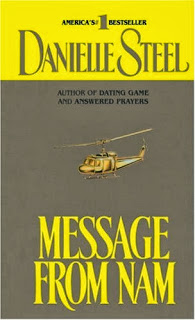
The Boys Who Fought in Nam Passed hand to hand, the wishes, the dreams, the hopes of an entire generation, an entire nation sent to war, a score of old men leading all our boys to die, while we watched in horror, in pain, in grief, the disbelief that we had to lose so many of our boys, their toys barely left behind, their eyes so young, sobright, so full of hope, the fight so long, so sad, the pain so bad, the wounds so deep until at last our young men sleep in their maker's arms again, their names carved in stone, never to come home, never to touch our tears again.  - lest we forget, lest we grow old, our hearts must never be so cold, we must not run and hide, we must remember them, the boys who died - let it not be in vain, let us not forget, the pain, the cries, the agonies, the braveries, the heroes, and the smiles, the time that was so long ago, across so many miles in a land so bright so green caught in a place just in between hope and lies, we must remember still, must promise that we always will touch their hearts while still we can, remember, friendsremember.the boys who died, who lived, who cried, the boys who fought in Nam.  1. SAVANNAH... BERKELEY... November 1996.

3-June 1968It was a chill gray day in Savannah, and there was a brisk breeze blowing in from the ocean.  There were leaves on the ground in Forsyth Park and a few couples were wandering hand in hand, some women were chatting and smoking a last cigarette before they went back to work.  d in Savannah High School, the hallways were deserted. The bell had rung at one o'clock, and the students were all in their classrooms.  There was laughter coming from one room, and silence from several others.  The squeak of chalk, the looks of bored despair on the faces of sophomores ill prepared for a surprise quiz in civics.  The senior class was being talked to about College Boards they were going to take the following week, just before Thanksgiving.  And as they listened, far away, in Dallas, gunfire erupted.  A man in a motorcade catapulted into his wife's arms, his head exploding horrifyingly behind him.  No one understood what had happened , and as the voice in Savannah droned on about the College Boards, Paxton Andrews tried to fight the sleepy waves of warm boredom.  And all of a sudden in the still room, she felt as though she couldn't keep her eyes open a moment longer.  Mercifully, at one-fifty the bell rang, all doors opened and waves of high school students poured into the halls, freed from quizzes, lectures, French literature, and the pharaohs of Egypt. Everyone moved on to their next rooms, with an occasional stop at a locker for a change of books, a quick joke, a burst of laughter.  And then suddenly, a scream.  A long anguished wail, a sound that pierced the air like an arrow shot from a great distance.  A thundering of footsteps, a rush toward a comer room normally used only by teachers, the television set flicked on, and hundreds of young worried faces pressing through the doorway, and people saying No!.


Continue Reading

Sunday, November 10, 2013

https://docs.google.com/uc?export=download&id=0B3vyNXp6qDWwb1pDVEozWV9IZXM
In any other supermarket, the woman walking down the aisle, pushing a cart between canned goods and gourmet spices, would have looked strangely out of place.  She had impeccably groomed shoulder-length brown hair, beautiful skin, huge brown eyes, a trim figure, perfectly done nails, and she was wearing a navy linen suit that looked as though she had bought it in Paris.  She wore high-heeled navy blue shoes, a navy Chanel bag, and everything about her was perfection.  She could have easily pretended she'd never seen a supermarket before, but she looked surprisingly at home here.  In fact, she often stopped at Gristede's at Madison and Seventyeeventh on the way home.  Most of the shopping was done by their housekeeper, but in a funny old-fashioned way, Mary Stuart Walker liked doing the shopping herself.  She liked cooking for Bill at night when he came home, and they had never had a cook, even when the children were younger.  Despite the impeccable way she looked, she liked taking care of her family, and attending to every minute detail herself.

Their apartment was at Seventy-eighth and Fifth, with a splendid view of Central Park.  They had lived there for fifteen of the nearly twenty-two years of their marriage.  sary Stuart kept an impressive home.

The children teased herZometimes about how "perfect" everything always was, how everything had to look and be just right, and it was easy to believe that about her.  Just looking at her, it was easy to see that she was somewhat compulsive about it.  Even at six o'clock, on a hot June evening in New York, after six hours of meetings, Mary Stuart had just put on fresh lipstick, and she didn't have a hair out of place.

She selected two small steaks, two baking potatoes, some fresh asparagus, some fruit, and some yogurt, remembering too easily the days when her shopping cart had been filled with treats for the children.

Saturday, November 9, 2013

https://docs.google.com/uc?export=download&id=0B3vyNXp6qDWwTWdtN0NCV2ZtZU0
This man, Bill Lexx, as I was about to find out, was standing in front of the third story men's bathroom window when I went to use it this morning. Outside the window, not inside the bathroom, but on the outside, in a suit, which I might add was not a three-piece, and he had taken his tie off; his socks didn't match the color of his suit. I only noticed that because I sit down when I pee. I know a lot of men don't do that, or would never admit it, but I do. My grandmother taught me it was impolite to be heard using the bathroom, period.

So, I'm sitting on the toilet, and this man, Bill, I guess he heard me, because I had to put the toilet seat down, you know, so I could sit on it, and it clanged against the porcelain base of the toilet. And he turns around and stares at me. Thank God I hadn't taken my pants off yet. I'd sat down on the toilet to retie my shoes.

I forgot to mention that.

See, Margie, the secretary in my office, made me untie my shoes when she was getting off the elevator. I mean, accidentally, made me untie them. She goes down to the basement to smoke instead of outside, says she can't completely appreciate a cigarette outside. I had walked a little past the elevator, not meaning to not speak, and then felt guilty and didn't want to be rude so I turned around to speak, and in the process of turning around, I stepped on my left shoestring.

https://docs.google.com/uc?export=download&id=0B3vyNXp6qDWwSEZYbFhYTVRnbnc
I can count on one hand the things I know about Tavvy.

I'll start with the pinkie. Tavvy is not her real name,but it's all U.L., or anybody else for that matter, have ever called her. We were the next house over, coming from town that is, and being such close neighbors, it was nothing new for us to get her J.C. Penny or Reader's Digest by mistake in the mail. That's the only way I ever knew her first and last names were Ouida and Rolan. Of course, I'd usually just call her Ms. Tavvy,you know, to her face.

Ring finger: she never had anything worth anything but one sister, Julette, who drowned while she was fourteen; I say "whileshe was fourteen" because according to U.L., Julette was sensitive about her age, and was not above reminding those around her when she turned half-ages, as in the following sentence: Julette received the Lord Jesus Christ into her heart at the Shabaha County-wide revival when she was thirteen anda half.

I would swear on a thousand Gideons that my friend Charlie almost drowned one time while he was visiting his aunt in Debalk. I wasn't there, I know, but he wasn't known to lie all that much. And he said it was about the best thing that had ever happened to him. It was soft and quiet and slow, his head full of Christmases and banana pudding which I think is gross and it would have depressed me even more if that'd been my lastthought as I left this earth, but, then, at the final minute of what could have been his last possible breath, this Choctaw — they were always at Kemmy Lake, also in Debalk, sitting on the water in boats drinking can after canof Jax — pulled him up over the side into the boat with them, scraping a long, single scar down the whole length of his arm on this piece of metal jutting out from the  boat, and so he lived. Plus, he'd been saved by a real liveChoctaw which  made me a little bit jealous. Charlie always got everything. 


Continue Reading

Friday, November 8, 2013

https://docs.google.com/uc?export=download&id=0B3vyNXp6qDWwUXA5YlR1aWQ1VGc
Introduction

This book is a work of fiction. It’s a story about a man named Jack Valentine, whose  path in life was in many ways similar to my own. Feeling very incomplete as a human  being, he set out on a search for wisdom to live a happier, healthier, and more beautiful  life. Through a series of meetings with three remarkable teachers, Jack discovered a  powerful philosophy to reshape his reality and access his destiny. The lessons Jack  learned through his extraordinary adventure will cause you to create wonderful changes  in your life as well. How do I know this? Because they’re the lessons that have  transformed mine.

I’ve experienced many setbacks along this journey through my days. And yet, each  stumbling block has eventually presented a stepping-stone that has brought me closer to my heart’s truth and my best life.

A number of years ago, I was a lawyer, chasing success and all the material trappings  that went along with it, thinking that this was the way to lasting fulfillment. But as I  worked harder and achieved more, I realized that nothing ever really changed. No  matter how many material possessions I gathered, the man I saw in the bathroom mirror  every morning was the same—I wasn’t any happier and didn’t feel any better. The more  I reflected on the state of my life, I began to become aware of an emptiness within my  heart. I started paying attention to its silent whispers, which instructed me to leave my  chosen profession and begin some serious soul-searching. I started to think about why I  was here on the planet and what my special mission was. I wondered why my life wasn’t  working and what deep changes needed to be made to get me on track. I looked at the  core beliefs, assumptions, and filters through which I saw the world, and I committed  myself to cleaning up the less-than-healthy ones. 


Continue Reading
Copyright © 2014 by readfulltext.blogspot.com